Showing posts with label native wildlife. Show all posts

Tuesday, 20 August 2013

Avon Wildlife Safari Day 33 - Deer, badgers, newts, butterflies, owls, bats, there's so much to see....

..at Folly farm, one of our top ten nature reserves. This 250-acre reserve, set in the beautiful Chew Valley, provides magnificent views over the lake and the surrounding area. It is home to a diverse selection of wildlife that live in a mosaic of habitats from ancient woodlands to wildlife ponds and wildflower meadows to orchards.
 With public access all year round (no dogs allowed), you can enjoy a frosty hill top climb in winter or a warm springtime dawn chorus walk in the woods. At dusk, during the warmer months, you can visit the extensive badger sett and catch a glimpse of the resident family of badgers, listen out for the owls or try to spot a shy deer roaming the woods.
photo: Darin Smith
Avon Wildlife Trust provides a downloadable guide about the reserve for you to take with you but there are waymarked walks and plenty of interpretation boards around the site to help you get the most from your visit.

The Folly Farm Centre, situated within the nature reserve is an Environmental Learning and Conference centre. Avon Wildlife Trust have successfully restored the old farm buildings from Sutton Court and the surrounding historic landscape to provide a fantastic location for a conference and a memorable place for learning. Our busy schools programme provides opportunities for students to explore the natural world in a safe and inspiring environment, whether they come for a day or an overnight experience.

And if you're wondering what the other 9 top nature reserves are then click here to find out!


Friday, 7 December 2012

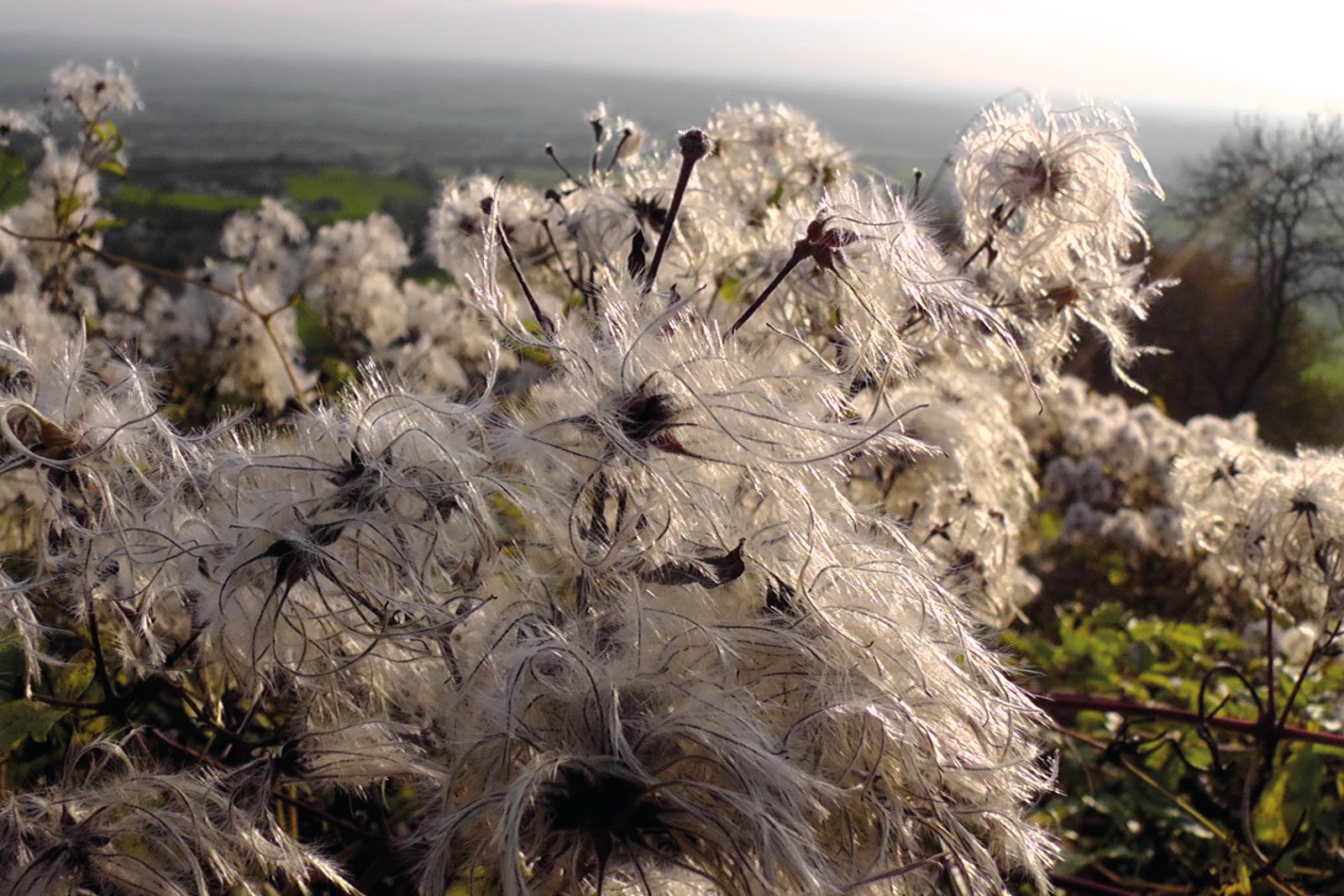
What is it? #11

With wispy, wintery, white tendrils blowing in the wind, I can be found all over the place, in woodlands, hedgerows, roadsides and hilltops, but what am I? I have a slightly almond smell, and with my distinctive grey, fluffy seed balls climbing and clambering over trees and bushes, I have several common names. How many do you know?

Find out more on Sunday!

Sunday, 25 November 2012

What is it? #10 revealed

These lovely mushrooms are called wood blewitts (Clitocybe nuda) or blue stalk mushrooms. Blewitt is the old English word for 'blue' and they do have a distinctive blue tinge to them. There are found in both deciduous and coniferous woodland and are widely eaten, though some caution should be exercised as there are known to cause an allergic reaction in some individuals. 

They are quite a common mushroom and have a distinctive purple cap and stem. Care is needed to make sure that these edible mushrooms are not confused with the poisonous, larger purple species of Cortinarius fungi so please make sure you only pick them if you are with a mushroom expert. Often growing in fairy rings, the cap can grow up to 15cms and have a mild aniseed smell. 

They are a popular food amongst wild food fans who like to cook them in butter with leeks or onions and you can find recipes, more pictures and lots of useful information on the wildmushroomsonline website here. Of course there are lots of different types of fungi that grow in the British Isles. We'd love to see your photos or hear your stories so get in touch with me at juliedoherty@avonwildlifetrust.org.uk and let me know what you find.

Friday, 23 November 2012

What is it? #10

Any idea what these are? They generally grow on leaf litter in woodlands but can also be found in compost heaps, grasslands and woodland clearings so can be found pretty much anywhere. This picture was taken at our lovely nature reserve at Folly Farm last November, so if you go out for a wintery walk this weekend, keep your eyes peeled.

I'll tell you more on Sunday!


Sunday, 28 October 2012

What is it? #6 revealed

photo: Wendy Denton
Dead man's fingers or Xylaria polymorpha are a type of mushroom, usually found growing on rotting or decaying wood, usually beech. They are inedible and have a surprising white, tough flesh inside, despite looking like burnt wood (or fingers!).

There are many different types of fungi with fantastic names, colours and shapes but remember that some mushrooms are very poisonous and can make you ill. Never taste a wild mushroom unless you are with an expert. 

For more fungi photos and information go to first-nature.

Sunday, 21 October 2012

What is it? #5 revealed

photo: Wendy Denton
This is the most invasive ladybird on Earth and it's called a harlequin ladybird, harmonia axyridis. Where you right? 

It arrived in Britain in 2004, possibly on some flowers or vegetables that were brought in to the country from Europe or Canada. It is a real danger to our native ladybird as it's a very good predator and can travel further distances than our native ladybirds, allowing it to find more food and easily out compete them. Harlequin ladybirds also eat a greater range of food, so if there are few aphids about they will eat other prey, including ladybird eggs, larvae and pupae!
Like all ladybirds, the harlequin ladybird undergoes complete metamorphosis and goes through an egg, larval, pupal and adult stage.Scarily a single female can lay over 1000 eggs! The most common ladybird in Britain is the seven spot ladybird but the two spot ladybird has declined by nearly half since the arrival of the harlequins.

So how can you tell the difference? Well, harlequin ladybirds are larger and more round than our natives.The most common forms in Britain are orange with 15-21 spots or black with 2 or 4 orange/red spots and their legs are almost always brown. If your ladybird is less than 5mm then it is unlikely to be a harlequin.


  http://www.harlequin-survey.org
Here's a selection of harlequin ladybirds that were found on one site in London. you can see that the markings do vary quite a lot and it can be difficult to distinguish from a native ladybird. For more help and to log your sightings go to the Harlequin Ladybird survey site - 
www.harlequin-survey.org

If you'd like to print out a guide to the most prominent ladybirds in the UK to help you go ladybird spotting you can find a good one here.

So, finally, here's a little quiz for you. See if you can work out if the ladybirds in the pictures below are native or harlequins. Good luck!