With our saws sharpened, the marshmallows ready to toast and a sunny day of hard work ahead, we met our team of enthusiastic volunteers from Rolls-Royce plc who joined us to help with some essential improvements to our bushcraft site.
With over 3000 students visiting our Folly Farm education centre each year and bushcraft one of our most popular day and residential visits, we really needed to expand our sites and get them ready for a full year ahead. The Rolls-Royce team had got in touch and offered their team as volunteers to help us out The team got stuck right in and soon had a parachute canopy up in the trees that will provide shelter on particularly rainy days keeping us lighting fires whatever the weather.
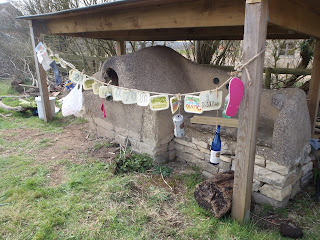
Two fantastic log stores were built with the addition of a clever water collecting system so that we had plenty of rainwater to put out our fires in the future and plenty of space for logs to fuel our fires.
A team of tree fellers were busy felling trees as part of our winter management plan, making sure to use every part of the tree with logs stacked in our new log stores and smaller branches left for the children to make shelters.
After all that hard work and with the sites looking so great we all had a chance to test our own survival skills by lighting fires with fire steels and cooking Bannock bread over the fire and toast those marshmallows.
What better way to test out our new sites than with 44 children from Stonham Aspal primary school who were staying at the centre all week for their school residential. With so many fresh branches around, the shelters were some of the best we've seen and as one boy put it "I wish I could live in here for the rest of the week".
With our new hand washing stations and outdoors kitchens the children learnt how to make their own bread and cook it over their fires, which roared with all the fresh wood that had been collected for them. A huge thank you to the team at Rolls-Royce, we can't wait to welcome more groups to our fantastic bushcraft site and get more children outdoors and engaged with nature. Jo Taylor, Learning Development Manager
On a magical, sunny day at Blagdon Lake, 1500 elvers (young
eels) were released by the Year 5s from Yatton Junior School, ready to start
the next stage of their amazing lives in the reservoir. Blagdon Lake
isn't just home to thousands of elvers though... the children also saw nesting
coots, mute swans, mallards, cormorants and the many gulls that make a home
there. In the woodland near the pumping station they also saw badger
setts, an otter holt (and got to see and smell otter poo!); they waded
through the long grasses and flowers of the meadow to a copse where blue tits
nest and bats roost. And talking of bats, they also stopped to look at
the old pump house which has been converted into a bat cave. The lake
provides an amazing habitat for such a wide range of plants and animals and
seeing all this wildlife 'in action' allowed the children to understand
more fully the food chains and webs that are part and parcel of such a wildlife
rich environment.
Year 5 at Milton Park Primary have been busy offering guided tours to their wonderful trout tank to the rest of their school as their eggs start to develop!
Whilst they have been busy learning all about the life cycles of trout, 54 students from year 5 investigated their own little area of freshwater yesterday in their school grounds.
Damselfly Nymphs found in the pond
Leader of the school’s Gardening
Club, Miss Crookes, asked some builders who were working in the school a couple
of years ago, whether they would be willing to dig a hole for a pond. They did, and the gardening club created a
small but very wildlife-friendly pond.
We weren’t sure what we would find yesterday, because January is still
very early in the season and the water was cold, but it was fantastic to find
plenty of freshwater hoglice, several types of damselfly nymphs and some midge
pupae. It will be interesting to see how
the pondlife develops over the coming months…
Meanwhile, back in the tank
indoors, the trout eggs are now ‘eyed’ and the first one hatched
yesterday. The temperature is a nice
cool 9 degrees, so progress is slow but steady.
Well done Year 5 and everyone at Milton Park, we can't wait to see how the brown trout develop.
After much anticipation, this week saw the arrival of some new wildlife to the offices at Avon Wildlife Trust. As part of the new 'Trout and About' learning project, starting in schools mid February, I will be rearing trout in the foyer at our Jacobs Wells Road office.
Fry and eggs ready for their temporary new home
Much planning, tank designing and learning about trout has been happening over the last few months and, finally, the tank arrived and Tony Donnelly from Bristol Water, brought in his little tub of fish eggs and fry to put in their new home. Navigating around staff who were having their lunch and looking on very bemused, we filled the tank and checked the chiller, flow and filter were all working correctly. We then introduced the fish eggs and fry which by this point, in an office of Wildlife Trust staff, had became quite a talking point.
Filling the tank
So, it all started off well but when I arrived the next morning I discovered a few fatalities. In the natural world this is inevitable, in fact 95% of trout don't make it passed the age of 1 in the wild but this was an artificial environment designed to facilitate the development of the eggs in the most productive way. A quick check of the cooler system told me why. With the cupboard doors below the tank closed there wasn't enough airflow and the chiller wasn't working effectively. This rise in temperature, in addition to the change of water and transportation of the fish was too much. Note to self, make some alterations to the chiller cabinet to allow better airflow. All is not lost, we live and learn and we are still having a better survival rate than in the wild.
In they go!
The Trout and About project has been kindly funded by Bristol Water as part of theircatchment management work to improve water courses in the area and supports Avon Wildlife Trust's learning strategy by providing hands on learning opportunities to link schools with their local natural environment. Schools in Bristol will have tanks in their classrooms and will rear trout from eggs over a four week period.
This is a fantastic opportunity to provide real, memorable learning experiences to support teaching across the KS2 curriculum, whilst allowing schools to participate in a local, conservation project. During the project
pupils will visit a local water course to learn about the ecology of rivers.
This will provide a connection with their local natural environment, making the
project more relevant to their own lives and neighbourhood, whilst providing
hands-on learning experiences. At the end of the project pupils will be invited
on a field trip where they will be able to release their young trout, visit the
hatchery at Blagdon and explore the
associated wildlife around the lake. Before it gets to the schools though I will be trialing the project myself, so follow my progress on this blog and see how I get on.
Our 'Living Landscapes' project involves working with Bishop Sutton Primary School. The project aims to get the school thinking about how humans influence the environment and use the local landscape.
A semi improved field
The school is located in a beautiful part of the Chew Valley with great wildlife right on their doorstep! So last month we explored the local landscape and walked from the school to Folly Farm.
The journey took us through a range of environments, such as Burledge Hill, a protected Site of Nature Conservation Interest (SNCI), through 'improved' and 'semi improved' grass fields, orchards, ancient walkways, alongside waterways, dried ponds and even a ravine!
Pond dipping
We also explored micro habitats and saw birds eggs in a nest tucked away in a wall and learnt about the importance of layed hedges to wildlife. After a few miles we arrived at our destination: Folly Farm and took a walk, some of us ran, though the fields past the 'owl corridors'. We had time to do some pond dipping too!
Our next visit to the school involved a trip to the brilliant Community Farm in Chew Magna.
Lots to learn from Head grower Andy
Growing onions
Head Grower Andy taught us about organic farming and how it compares to conventional farming, the importance of soil and wildlife on the farm. The children also got a chance to put their green fingers to work and planted onions and spinach.
Visit the Community Farm website and see some photos of the day click here
Got a taste for growing some veg? Visit our WILD SCHOOLS website for free resources on how to grow and conserve an edible garden click here
Growing spinach
Oink
More updates to follow about our Living Landscapes project on our blog!
We were visited by pupils from Holymead Primary School for a 'Sustainability Day' at Folly Farm.
The mystery bags of soil components
What does sustainability mean? We asked this question at the start of the day... by the end of the day we all had a better understanding of 'sustainability' and how we can all help to live more sustainably! Here is an insight into some of the activities:
Rotters Restuarant
Creating menus for Rotters Restaurant!
It takes about 1000 years for an inch of soil to form. Each pupil took it in turn to bravely put their hands in mysterious bags to try and guess the components of soil. It is so important ... think about it... what would we eat if there was no soil!!! Everything depends on soil: vegetables, fruit trees, rice, wheat, farm animals, even fish!
We took a trip to ROTTERS RESTAURANT for the 'best grub in town!' Here we asked the class to create menus for a selection of diners such as beetles, bugs, worms and spiders .
We learnt that the woodland floor is an abundant 'restuarant' that a wide variety of organisms rely on... although most who dine here may end up on the menu too!
Nature detectives
Exploring the Orchard Ecosystem
We have orchards at Folly Farm, which are home to a variety of wildlife. Picture cards of some of this wildlife were hanging in the trees: honey bee, hedgehog, horseshoe bat, flycatcher, tree blossom - to name a few!
The class had to become nature detectives to find all of the pictures and match them up to appropriate descriptions about the behaviour, habitat, diet and important roles of the species in the orchard.
Exploring in the orchard
Then things got a bit muddier as we searched for mini beasts in the orchard. Spiders, worms, beetles, earwigs and woodlice were all found. So many organisms use the orchards, rely upon each other, and each have important roles in supporting the habitat. A great example of the balance of nature!
Something that you may not think about is what happens to our rubbish when we throw it away? Well, we know it gets taken to landfill- but then what?! How quickly does 'stuff' decompose? The children tried to work this out! We had a pile of rubbish containing flip flops, cans, paper, glass, plastics and food waste. The class had to try and put into chronological order how long it takes for this rubbish to decompose. We were all very shocked at how long our rubbish takes to break down once it is in landfill, for example, 1,000,000 years for glass to decompose ... around 80 years for an aluminium can... the problem of plastics that are not biodegradable and end up polluting oceans and harming wildlife!
This activity really hits home the importance of the motto 'reduce, reuse, recycle'! Reducing how much waste we produce in the first place, reusing what we can and recycling what we cannot!
We had great fun at Folly Farm on our half-term Bush Craft day!
After escaping the lesser spotted bear at Folly Farm (!) by doing SAS-style rolls through the woods, the children worked together to make their very own survival shelters. These weren't just any old shelters - one group even managed to fit theirs with a water drainage system which they were pretty chuffed about!
Having made their shelters we were all feeling a bit peckish and so the children worked together to build their own fires and bake some bread.
After making some lovely cinnamon and sugar dough we wrapped it around sticks and toasted it in the fire...and then topped it off with some nutella...Yum!
We weren't quite finished there though - Bush craft isn't quite the same without the mandatory toasted marshmallows!
It was great to see how well the children looked out for and helped each other in the different activities.
Thanks to all the kids for making it such a fun trip out!
Pupils from Bowsland Green Primary School became Nature Detectives for the day on their visit to Folly Farm. We recorded some of their findings and thoughts about their day at our Learning Centre and Nature Reserve.
Click on the quotes below to hear about what the pupils thought about:
Last Tuesday we had a fun-filled, action packed day at Folly Farm, our Learning Centre and Nature Reserve. We were joined by pupils from Bowsland Green Primary School, who got 'stuck in' to a range of activities.
Pond dipping
We also explored micro habitats in the woodlands. We had to rummage around under leaves, dead wood and in soil to find out mini beasts, who were a bit reluctant to make an appearance in the cold, but we discovered worms, spiders, snails and woodlice, to name just a few. Then, under the cover of our outdoor classroom, we worked out what food chains there are in the woodland... who eats what!
In the woods
We then turned detective and examined owl pellets! Owls eat small mammals, usually whole! They regurgitate pellets made up of bones and fur, parts that they cannot digest. Through careful inspection of skeletons within the pellets, we were able to decipher the owl's dinner. Mice and voles were mainly on this hunters' menu!
Disecting owl pellets
A great day was had by all... The pupils from Bowsland Green were great fun and brilliant nature detectives!
Follow us on Twitter @Wildschools
To book your visit to Folly Farm Learning Centre and Nature Reserve click here
Pond dipping was a firm favourite amongst the visitors, who investigated what creatures were lurking under the water... it was surprising to see so much life in the water during the winter!
I had a fabulous day out at Dolebury Warren on monday identifying late autumn fungi with expert help from local ecologist and mycologist, Justin Smith.
What a day we had! There were carpets of fungi to be found of every colour imaginable! If you're out and about in Dolebury this autumn then have a look through the pictures below to see what you could find.
We found some very impressive fairy rings of Clouded Agaric. The size of fairy rings can be used to determine how old they are since they move outwards with time.
I enjoyed some of the Wood Blewit for my dinner, fried in garlic and butter...mmmm.
There was a huge array of different wax cap species that we found in the grass land areas of the reserve. These are often brightly coloured species with slimy caps. The slimey surface of many fungi acts as a protective measure against slugs and snails which although slimey themselves, are not so fond of other slimey things!
The bright colours of many of the wax cap fungi may make them appear poisonous however, a number of them, including the Scarlet Hood are in fact edible.
The distinctive smell of some fungi help in their identification. Rosy Bonnet (Mycena rosea) smells of radish; Clitocybe fragrans smells of aniseed and Hygrocybe nitrata smells of bleach (nitrous...hence the name).
Here's a few interesting ones for you:
The milk cap Lactarius deterrimus exudes droplets of 'milk' when damaged. This specimen gave a bright orange milk which turned dark red within 10 minutes.
You need to have a keen eye to spot Earth tongues. If you look carefully, you might see a few of these poking up out of the grass like little elf ears...or tongues!
And finally, the infamous Fly Agaric (Amanita muscaria) which we found nestled under some trees. It is probably the easiest fungus to identify with its distinctive red cap with white warts, and is often depicted in fairy tales alongside elves and goblins. This fungus gained its name from the medieval tradition of breaking it into milk and using it to stupefy flies for easy swatting.
There are more fungi photos from the day on our flickr page.
Thanks to Justin Smith for sharing his knowledge on a fantastic fungi filled day at Dolebury Warren!


 Two fantastic log stores were built with the addition of a clever water collecting system so that we had plenty of rainwater to put out our fires in the future and plenty of space for logs to fuel our fires.


 With our new hand washing stations and outdoors kitchens the children learnt how to make their own bread and cook it over their fires, which roared with all the fresh wood that had been collected for them.